Florida Building Permit Delays 2026: What Contractors Need to Know
Key Takeaways
- Florida building permit delays in 2026 range from 2-8 weeks across major counties, with Miami-Dade and Broward experiencing the worst backlogs
- Every week of delay costs contractors $5,000-$8,000+ in carrying costs on commercial projects and roughly $30,000 total per single-family new construction project
- Private providers under Florida Statute 553.791 deliver plan reviews in 24 hours (residential) to 2 days (commercial) vs. weeks through building departments
- Spring construction season (March-October) intensifies backlogs as permit volume surges while building department staffing stays flat
- Virtual inspections through private providers eliminate inspector scheduling delays and no-shows that cost contractors full workdays waiting on-site
- Starting July 1, 2026, HB 803 requires building departments to reduce permit fees 25-50% when contractors use private providers on commercial projects
How long are Florida building permit delays in 2026, and how can contractors avoid them?
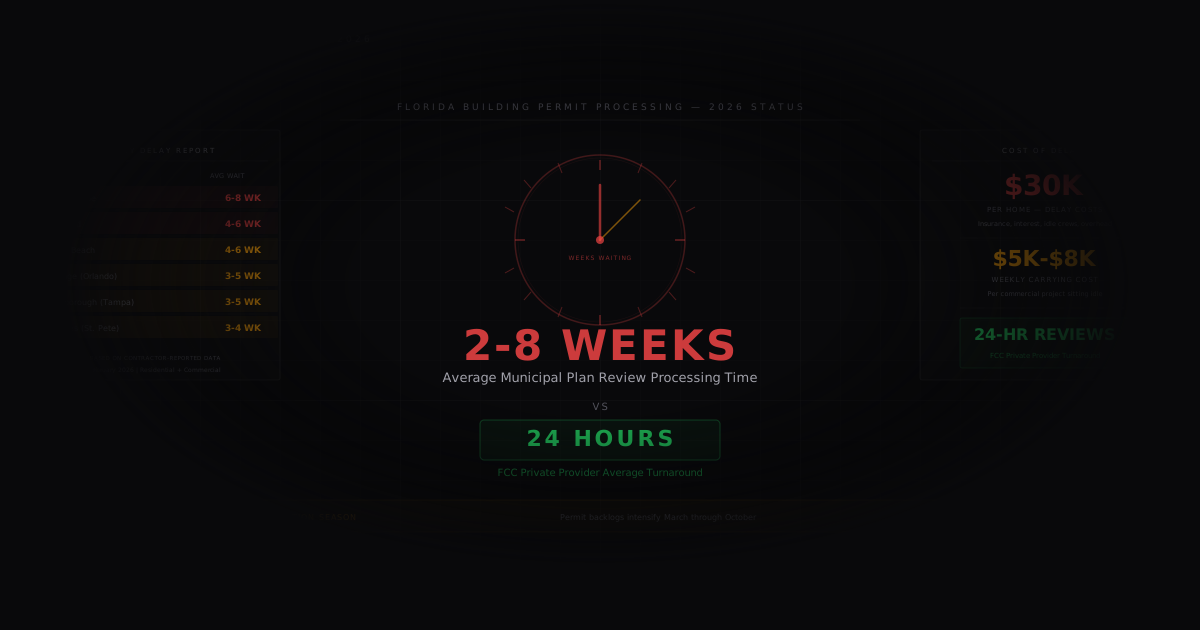
Florida building permit delays in 2026 average 2-8 weeks depending on the county. Miami-Dade runs 6-8 weeks, Broward and Palm Beach 4-6 weeks, and Tampa/Orlando metro areas 3-5 weeks. Contractors can bypass these delays by using a private provider under Florida Statute 553.791, which delivers plan reviews in as little as 24 hours and virtual inspections on demand -- eliminating weeks of downtime and thousands of dollars in carrying costs.
Florida's inspection capacity is tightening — here's the fix that's already written into law.
What the Video Covers
- Florida's building inspector workforce is aging, and fewer new inspectors are entering the trade to replace those retiring.
- As that capacity tightens, permit reviews and inspections at building departments can take longer — a demographic shift, not a department failure.
- You don't have to absorb the wait. F.S. 553.791 gives you the right to use a licensed private provider for plan review and eligible inspections.
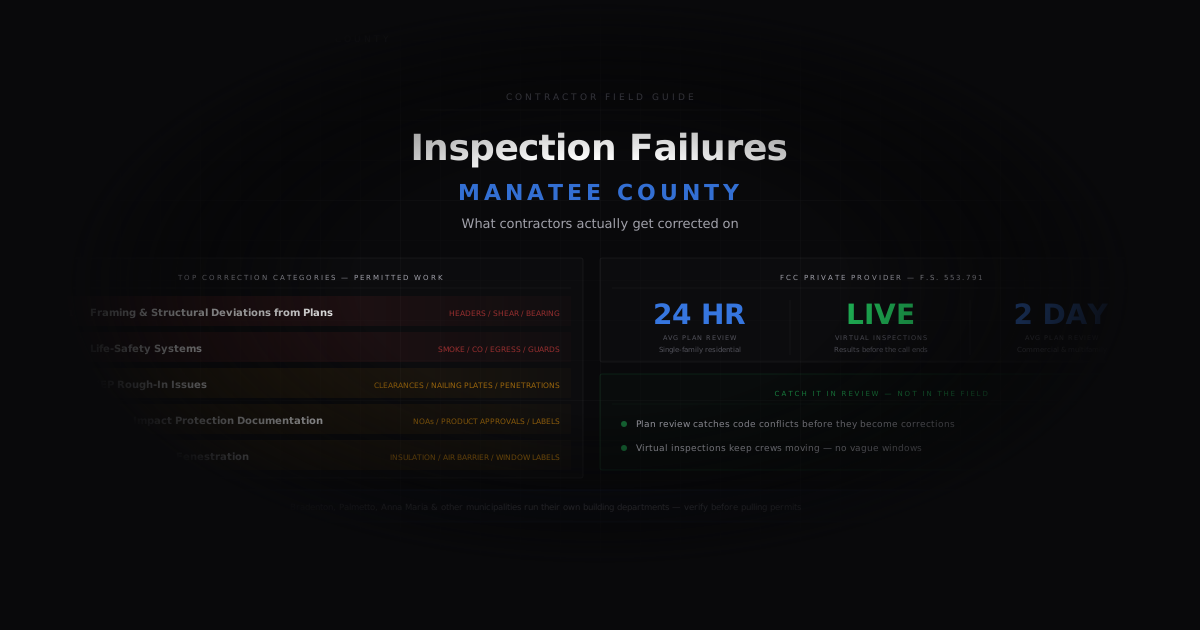
- Private providers work alongside the building department, which may not repeat a code review or inspection the private provider has performed.
- HB 803, in effect since July 1, 2026, strengthened Florida's private-provider framework — the fix is already law.
You know the drill. You submit your plans to the building department, and then you wait. Two weeks. Four weeks. Six weeks. Meanwhile, your crew is sitting on another job, your carrying costs are climbing, and your client is calling every other day asking when construction starts.
Florida building permit delays in 2026 are running 2-8 weeks across the state's major counties. And with spring construction season ramping up, those numbers are getting worse, not better.
Here is a county-by-county look at current processing times, what is causing the backlogs, how much they are actually costing you, and the fastest way to get around them.
How Bad Are Permit Delays in Florida Right Now?
The short answer: bad, and getting worse heading into peak season.
Building departments across Florida are processing plan reviews at roughly the same pace they were five years ago, but permit volume has surged. Post-hurricane rebuilding, population growth, and a commercial construction boom are all pushing more applications through a system that has not scaled its staffing to match.
Here is what contractors are reporting on the ground:
| County / Metro | Avg. Plan Review Wait | Trend |
|---|---|---|
| Miami-Dade | 6–8 weeks | Worsening |
| Broward | 4–6 weeks | Stable / High |
| Palm Beach | 4–6 weeks | Worsening |
| Lee County | 3–6 weeks | Improving slowly |
| Orange (Orlando) | 3–5 weeks | Stable |
| Hillsborough (Tampa) | 3–5 weeks | Worsening |
| Pinellas (St. Pete) | 3–4 weeks | Stable |
| Sarasota | 2–4 weeks | Stable |
| Collier (Naples) | 2–4 weeks | Stable |
| Duval (Jacksonville) | 2–3 weeks | Stable |
Note: These represent typical plan review processing times reported by contractors in early 2026. Actual timelines vary by project complexity, submittal completeness, and time of year. Inspection scheduling delays add additional time beyond plan review.
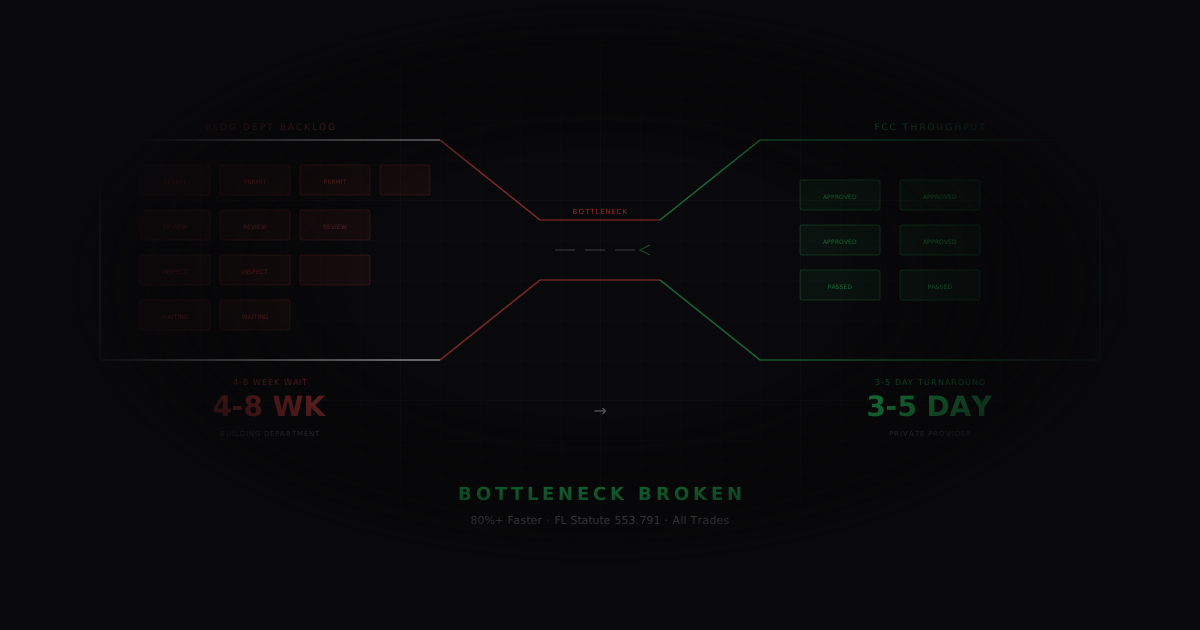
Compare that to a private provider like FCC: 24-hour average turnaround for residential plan reviews. 2-day average for commercial. That is not marketing fluff — that is the actual average across thousands of projects.
County-by-County Delay Analysis
Miami-Dade County
Miami-Dade remains the most backlogged jurisdiction in the state. Plan review processing times of 6-8 weeks are standard, and complex commercial projects can push past 10 weeks. The county’s building department processes tens of thousands of permits annually, and staffing shortages have been a persistent issue.
Miami-Dade has also historically been one of the more restrictive counties for private providers, making the situation doubly frustrating for contractors who know a faster option exists but face administrative barriers. That landscape is changing — HB 803 (effective July 1, 2026) will mandate fee reductions for private provider usage on commercial projects statewide, including Miami-Dade.
Broward County
Broward County runs 4-6 weeks on average for plan reviews, with peak-season submissions sometimes stretching past 6 weeks. The county recently lifted its ban on virtual inspections, which opens the door for contractors to reduce delays on the inspection side as well.
Broward calculates commercial permit fees as a percentage of job value — typically around 3% for mechanical, plumbing, and similar trades. Combined with long processing times, contractors in Broward are paying premium fees for slow service. A private provider delivers faster results and, under HB 803, will also reduce those fees.
Palm Beach County
Palm Beach County plan review times are running 4-6 weeks, trending upward as the county sees continued residential and commercial development. The western communities and coastal areas are particularly active, driving permit volume higher.
Contractors working in municipalities within Palm Beach County (West Palm Beach, Boca Raton, Delray Beach, Boynton Beach) should check individual municipal processing times as well — some municipalities are faster than the county, others slower.
Orange County (Orlando)
The Orlando metro is one of Florida’s fastest-growing commercial markets, and Orange County plan reviews are running 3-5 weeks. Theme park expansion, mixed-use development, and residential growth are all contributing to higher permit volumes.
Seminole County, adjacent to Orange, is also seeing increased processing times of 2-4 weeks as Orlando’s growth pushes development into neighboring jurisdictions.
Hillsborough County (Tampa)
Tampa’s building boom is pushing Hillsborough County plan review times to 3-5 weeks, with commercial projects trending toward the longer end. The City of Tampa’s building department processes separately from the county, and their timelines can differ.
The Tampa Bay metro (including Pinellas and Pasco counties) collectively represents one of the highest-volume permitting regions in the state.
Pinellas County (St. Petersburg / Clearwater)
Pinellas County is holding relatively steady at 3-4 weeks for plan reviews. St. Petersburg and Clearwater process through their own municipal building departments, so contractors should verify which jurisdiction applies to their specific project address.
Why Delays Are Getting Worse in 2026
Three factors are converging to make 2026 particularly painful for Florida contractors:
1. Post-Hurricane Rebuilding Demand
Hurricanes Milton and Helene in late 2024 generated tens of thousands of rebuilding permits across Southwest and Central Florida. That rebuilding work is still ongoing in 2026, competing for plan reviewer time with new construction and renovation projects. Counties like Lee, Charlotte, and Sarasota are still processing hurricane-related permits alongside normal volume.
2. Construction Boom Across South and Central Florida
Florida’s population continues to grow, and construction activity is at near-record levels. Commercial development in Orlando, Tampa, and South Florida metros is pushing permit applications higher year over year. More applications with the same number of plan reviewers equals longer wait times. The math is simple.
3. Building Department Staffing Shortages
This is the root cause. Most county and municipal building departments have not hired additional plan reviewers or inspectors to match the growth in permit volume. Budget constraints, difficulty competing with private-sector salaries, and the specialized nature of the work (licensed engineers and architects) make it hard for building departments to staff up quickly.
The result: the same number of reviewers processing significantly more applications. Processing times stretch. Backlogs grow. Contractors wait.
What Permit Delays Actually Cost You
This is where it gets real. Delays are not just an inconvenience — they are a direct hit to your bottom line.
Carrying Costs Add Up Fast
Every week a project sits waiting on a plan review or inspection, you are paying:
- Insurance premiums — builder’s risk, general liability, workers comp
- Loan interest — construction financing does not pause for the building department
- Equipment rentals — rental clocks do not stop because your permit is in a queue
- Crew wages and overhead — your people still need to get paid
- Opportunity cost — crews tied up on a stalled project cannot start the next one
Industry estimates put the total cost of permitting and inspection delays at roughly $30,000 per single-family new construction project in Florida. For commercial projects, weekly carrying costs run $5,000-$8,000+ depending on project size.
Run the numbers on your own projects. If a 4-week delay on a $2M commercial build costs you $20,000-$32,000 in carrying costs, and a private provider can eliminate 3 of those 4 weeks for a few hundred dollars in plan review fees, the ROI is not even close.
The Inspection Bottleneck
Plan review delays are just the beginning. Once construction starts, inspection scheduling creates another bottleneck:
- Building departments give vague inspection windows — sometimes a range, sometimes nothing at all
- Inspectors show up early, late, or not at all — no accountability, no recourse
- Someone has to be on-site waiting — that is a contractor, project manager, or employee burning hours
- Failed inspections restart the clock — if the inspector finds an issue, you wait days or weeks for a reinspection
A private provider eliminates this entirely. FCC offers virtual inspections — live via video call (matched with an inspector in minutes) or offline submission with results in 1-2 hours. No scheduling windows. No waiting around. No inspector no-shows.
The Private Provider Alternative: 24 Hours vs. 8 Weeks
Florida Statute 553.791 gives every property owner in the state the right to use a private provider instead of the local building department for plan reviews and inspections. It has been law since 2002, but most contractors are just now realizing how much time and money it saves.
Here is the comparison that matters:
| Service | Building Department | FCC (Private Provider) |
|---|---|---|
| Residential plan review | 2–6 weeks | 24-hour average |
| Commercial plan review | 3–8 weeks | 2-day average |
| Inspection scheduling | 3–10 days + vague windows | Instant (live) or 1-2 hours (offline) |
| Results delivery | Days to weeks | Before the call ends (live) or within hours (offline) |
| Inspector no-shows | Common | Not possible (virtual) |
| Coverage | Single jurisdiction | 47 counties, 150+ building depts |
How It Works
- Submit your plans through FCC. Upload your construction documents through FCC's website. Plan reviews come back in 24 hours (residential) or 2 days (commercial).
- Receive approved plans and paperwork. FCC returns stamped plans, the Notice to Building Official (NTBO), and any required private provider documentation.
- You file the permit. Take the approved plans and NTBO to your building department and file your permit application. The building department is required to accept private provider plan reviews under Florida law.
- Request inspections through FCC. As construction progresses, request virtual inspections through FCC. Live inspections connect you with a licensed inspector in minutes. Offline inspections let you submit photos and video for review within 1-2 hours.
- FCC files the COC. When all required inspections pass, FCC files the Certificate of Compliance with the building department to close the permit.
That is it. No multi-week wait for plan review. No vague inspection windows. No inspector no-shows. No starting over because someone at the building department lost your paperwork.
Spring Construction Season: Why Timing Matters Right Now
If you are reading this in February or March, you are looking at the front edge of Florida’s peak construction season. Permit volumes surge from March through October, and building departments that are already running 3-5 week backlogs will push to 5-8 weeks or more.
Contractors who set up with a private provider before peak season hits have a significant competitive advantage:
- Start projects weeks earlier than competitors waiting on building department reviews
- Complete more projects per year by eliminating dead time between phases
- Bid more competitively because your timelines are actually predictable
- Reduce carrying costs by keeping projects moving instead of stalling
- Keep clients happy with realistic start dates you can actually hit
Coming July 1: HB 803 Adds Fee Savings on Top of Time Savings
As if the time savings were not enough, HB 803 (effective July 1, 2026) requires Florida building departments to reduce permit fees by 25-50% when contractors use private providers on commercial projects.
That means the same private provider that saves you weeks on plan reviews and eliminates inspection delays will also save you thousands in permit fees. For a full breakdown of HB 803 — including county-by-county savings estimates — read our complete HB 803 guide.
Key Takeaways
- Florida building permit delays in 2026 range from 2-8 weeks across major counties, with Miami-Dade and Broward experiencing the worst backlogs.
- Every week of delay costs real money — $5,000-$8,000+ per week in carrying costs on commercial projects, and roughly $30,000 total per single-family home.
- Private providers deliver plan reviews in 24 hours to 2 days vs. weeks through building departments, authorized under Florida Statute 553.791.
- Spring construction season intensifies backlogs. Getting set up with a private provider now means you skip the line when volumes peak.
- Virtual inspections eliminate scheduling delays — no more waiting on-site for inspectors who arrive late or not at all.
- HB 803 adds mandatory fee reductions (25-50%) for private provider usage on commercial projects starting July 1, 2026.
Stop Waiting. Start Building.
Freedom Code Compliance is a private provider registered in 47 Florida counties with 150+ building department registrations. We handle plan reviews (24-hour average for residential, 2-day for commercial) and virtual inspections (live or offline, from your phone).
Every day you wait on a building department plan review is a day your project is not generating revenue. Every inspection delay means crews shuffled to other jobs and timelines blown. That is money out of your pocket.
Set up your account now and have your next set of plans reviewed before the building department would even assign a reviewer.
Submit your plans or call us directly. Real people answer the phone.
Frequently Asked Questions
How long are Florida building permit delays in 2026?
Florida building permit delays in 2026 vary by county but typically range from 2-8 weeks for plan review processing. Miami-Dade County averages 6-8 weeks, Broward and Palm Beach counties run 4-6 weeks, and the Tampa and Orlando metro areas (Hillsborough, Orange, Pinellas) average 3-5 weeks. These are plan review processing times only and do not include inspection scheduling delays, which can add additional days to weeks per inspection milestone.
Why are Florida building permits taking so long in 2026?
Florida building permit delays are driven by three factors converging in 2026: continued post-hurricane rebuilding demand (particularly from Hurricanes Milton and Helene in late 2024), a construction boom across South and Central Florida that has pushed permit volumes to record levels, and chronic understaffing at county and municipal building departments. Most building departments have not increased plan reviewer headcount to match the growth in permit applications, creating backlogs that worsen each construction season.
How much do building permit delays cost Florida contractors?
Industry estimates put the total cost of permitting and inspection delays at approximately $30,000 per single-family new construction project in Florida. For commercial projects, weekly carrying costs typically run $5,000-$8,000+ depending on project size, including insurance premiums, loan interest, equipment rentals, crew wages, and overhead. A 4-week plan review delay on a $2M commercial project can cost $20,000-$32,000 in carrying costs alone, not counting lost revenue from projects that could have started sooner.
What is a private provider and how does it speed up permits in Florida?
A private provider is a licensed engineer or architect authorized under Florida Statute 553.791 to perform plan reviews and building inspections as an alternative to local building departments. Private providers like Freedom Code Compliance deliver plan reviews in 24 hours (residential) to 2 days (commercial) compared to 2-8 weeks through building departments. Property owners have the legal right to choose a private provider, and building departments are required to accept their work.
Which Florida counties have the worst permit delays?
As of early 2026, the counties with the longest permit processing times include Miami-Dade (6-8 weeks), Broward (4-6 weeks), Palm Beach (4-6 weeks), and Lee County (3-6 weeks due to ongoing hurricane rebuilding). The Tampa metro area (Hillsborough, Pinellas) and Orlando metro (Orange, Seminole) typically run 3-5 weeks. Even smaller counties that historically processed permits quickly are seeing 2-3 week backlogs as Florida's construction boom continues.
Can I use a private provider in any Florida county?
Florida Statute 553.791 authorizes private providers statewide, meaning you have the legal right to use one in any county or municipality. However, private providers must be registered with each building department where they operate. Freedom Code Compliance is registered in 47 Florida counties with 150+ building department registrations, covering approximately 75% of the state's permitting activity. Check with your private provider to confirm they are registered in your specific jurisdiction.
Will HB 803 reduce permit costs for contractors using private providers?
Yes. Starting July 1, 2026, HB 803 requires Florida building departments to reduce permit fees by at least 25% when a private provider handles part of the plan review or inspection services on a commercial project, and by at least 50% when a private provider handles all of it. This means contractors on commercial projects will save both time (faster plan reviews and inspections) and money (mandatory fee reductions) when using a private provider. See our full HB 803 breakdown for details on how to qualify.