Big Wins for Florida Contractors: What the New HB 683 Law Means for Your Business
Key Takeaways
- HB 683 strengthens contractor rights to use private providers in Florida
- Building departments cannot create unnecessary barriers to private provider services
- Fee transparency requirements help contractors understand their savings
- The law builds on FL Statute 553.791 to protect contractor choice
What does Florida HB 683 mean for contractors?
Florida HB 683 strengthens contractor rights to use private providers for building code services. The law prevents building departments from creating unnecessary barriers, requires fee transparency, and reinforces timeline requirements—making it easier for contractors to take advantage of faster, more efficient private provider services.
In 2023, the Florida Legislature passed HB 683, and it quietly changed the game for contractors who use private providers. If you missed the news—or heard about it but weren't sure what it meant—here's the breakdown.
The short version: your rights just got stronger. Building departments have less room to create obstacles. And if you've been on the fence about trying private providers, the legal footing just got more solid.
What Was the Problem?
Florida Statute 553.791 has allowed private providers since the early 2000s. On paper, contractors have had the right to use licensed professionals instead of building departments for plan reviews and inspections for over twenty years.
In practice? Some building departments made it harder than it needed to be.
Contractors reported departments dragging their feet on accepting private provider approvals. Extra paperwork requirements that weren't in the statute. Confusing guidance about what was allowed. Nothing technically illegal, but enough friction to discourage contractors from exercising their rights.
HB 683 addressed these problems directly.
What the New Law Does
House Bill 683 strengthens the existing private provider framework in several important ways.
Clearer Contractor Rights
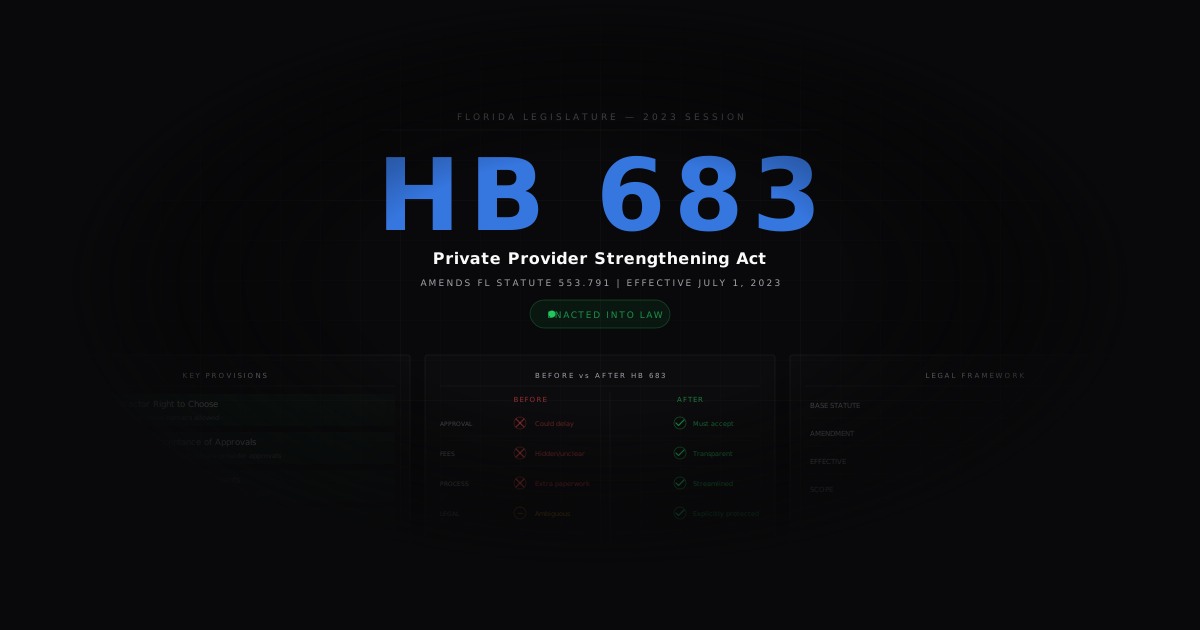
The law reinforces that contractors have the right to choose private providers. Building departments can't create administrative barriers designed to discourage that choice. If a private provider approval meets the statutory requirements, the building department must accept it—period.
Streamlined Processes
The legislation addresses some of the procedural friction that was slowing things down. Clearer requirements mean less back-and-forth, fewer "we need additional documentation" delays, and more predictable timelines.
Fee Transparency
Building departments must be clear about fee reductions when contractors use private providers. Under existing law, you're entitled to reduced fees since the department isn't doing the review or inspection work. HB 683 reinforces this requirement and makes it harder for departments to obscure these savings.
Legislative Reference
HB 683 builds on FL Statute 553.791, strengthening contractor rights and removing barriers that some building departments had created around private provider services.
What This Means Practically
If you've used private providers before, you might notice smoother interactions with building departments. Less pushback. Fewer "we need to verify this" delays. The law gave departments clear guidance, and most are following it.
If you've been hesitant to try private providers because you weren't sure about the legal standing, HB 683 should give you confidence. The Legislature just reinforced that this system is legitimate, protected, and here to stay.
If you've had building departments give you trouble about private provider approvals in the past, you now have stronger legal backing if similar issues arise. The law is clearer, and your rights are more explicitly protected.
The Bigger Picture
HB 683 passed because contractors were experiencing real problems. The Legislature heard feedback about building department friction, investigated the issues, and took action.
That's worth noting. Private providers aren't some workaround or loophole that might get closed. They're a system the Florida Legislature has actively chosen to strengthen. The trend is toward making private providers easier to use, not harder.
For contractors, this means the investment in learning the private provider system is safe. The relationships you build, the processes you set up, the time savings you gain—those aren't going away. If anything, future legislation is likely to make things even smoother.
"When HB 683 passed, we noticed the change immediately. Building departments that used to give us friction suddenly processed everything smoothly. The law works."
Taking Advantage of Your Rights
The law is only useful if you use it. If you're a Florida contractor dealing with permit delays, long inspection wait times, or building department backlogs, you have options that are now more clearly protected than ever.
Freedom Code Compliance offers plan review and inspection services throughout Florida. We operate under the full protection of FL 553.791 as strengthened by HB 683. Building departments accept our approvals because the law requires them to.
If you've been waiting to try private providers, there's never been a better time. The legal framework is solid, the processes are streamlined, and the benefits are real.
Your Rights Are Protected
HB 683 reinforced what the law already said: you can use private providers, and building departments must accept it.
Get Started →Frequently Asked Questions
How does HB 683 relate to FL 553.791?
HB 683 builds on FL Statute 553.791 by strengthening its provisions and addressing issues where some building departments were creating obstacles to contractors using private providers.
Do all Florida building departments have to comply with HB 683?
Yes, HB 683 applies statewide and all Florida building departments must comply with its provisions regarding contractor rights to use private providers.