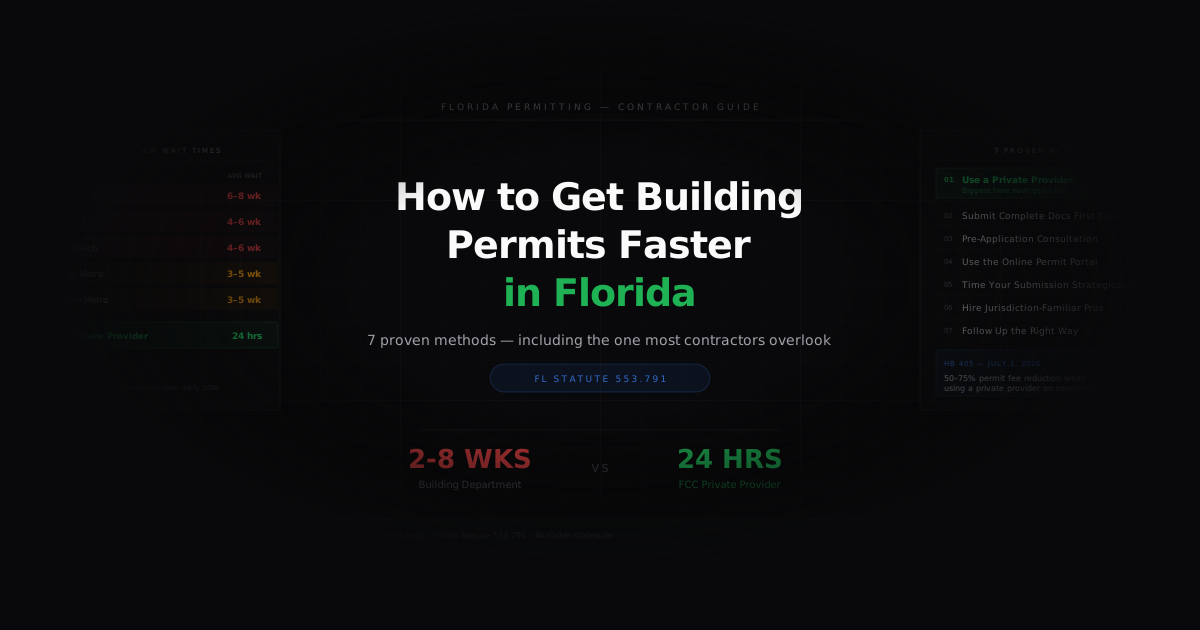
How Florida Contractors Can Cut Permit Costs by 25–65%: The Private Provider Fee Reduction Guide

Key Takeaways
- FS 553.791 gives every Florida contractor the legal right to elect a private provider and capture permit fee reductions of 25–65% — but you must formally notify the AHJ before permit issuance.
- The reduction tier depends on jurisdiction and scope: Maitland 50%, Tampa 30%, Martin County 65%, Alachua County 25% — always verify your county's adopted fee schedule.
- HB 683 (effective July 2024) adds a 5-business-day hard deadline for single-trade residential permits, so private provider plan review now delivers both speed and savings simultaneously.
- The fee reduction applies to the county or municipality's portion of permit fees; impact fees and DBPR fees are separate and unaffected.
- Freedom Code Compliance serves 55 Florida counties and handles the private provider election paperwork, plan review, and inspections on your behalf — so you capture the reduction without additional administrative burden.
How much can Florida contractors save on permit fees by using a private provider?
Florida contractors who elect a private provider under FS 553.791 are legally entitled to a permit fee reduction of 25–65%, depending on jurisdiction and whether the election covers plan review, inspections, or both. On a $200,000 project at a 35% tier, that is a direct cost reduction of $700–$3,500 or more in permit fees alone.
The Legal Right Florida Contractors Don't Know They Have
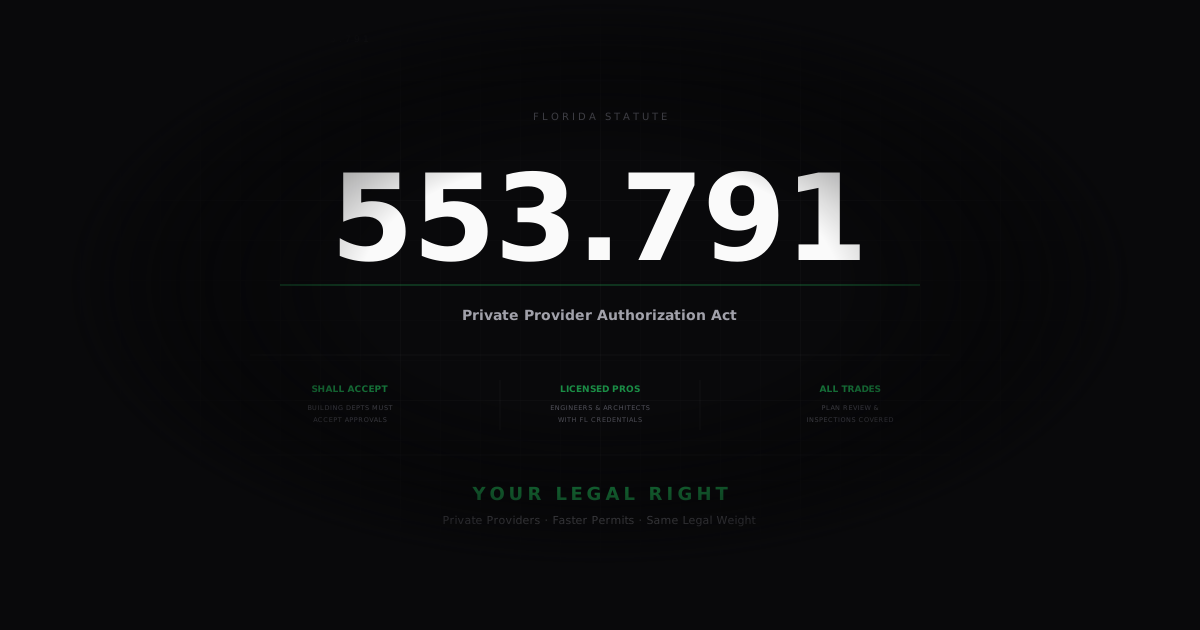
Most Florida contractors treat permit fees as a fixed cost of doing business — an unavoidable line item on every project budget. What they don't know is that Florida Statute 553.791 gives every contractor a legally enforceable right to cut those fees significantly on nearly every permit they pull.
The mechanism is called a private provider election. When you elect a licensed private provider to perform plan review, inspections, or both, the Authority Having Jurisdiction (AHJ) — your county or city building department — is required by law to reduce its permit fees proportionally. The department is charging you for services it's no longer providing. FS 553.791 closes that gap.
This isn't a loophole or a negotiation tactic. It's a statutory right written into Florida law specifically to give contractors, developers, and property owners a faster, more predictable alternative to overwhelmed government building departments. The fee reduction is the financial corollary to the service transfer.
Yet the vast majority of Florida contractors have never claimed it — primarily because government PDFs bury the mechanics in legal language, and no one has laid out the practical steps in plain terms. That changes here.
How the Fee Reduction Is Calculated: Tiers, Services, and Real County Examples
The permit fee reduction under FS 553.791 is not a flat discount. It is calculated based on which services the private provider performs and how the jurisdiction has structured its fee schedule. Understanding this distinction is the difference between a 30% reduction and an 80% reduction on the same project.
Plan Review vs. Inspections vs. Both
Most permit fees are broken into two functional components: plan review fees (the building department's cost to review submitted drawings and documents for code compliance) and inspection fees (the cost to send inspectors to the jobsite). When you elect a private provider for plan review only, you get the plan-review portion of the fee reduced. When you elect for inspections only, you get the inspection portion reduced. When you elect for both — which is the full private provider model — you capture the full reduction available under your jurisdiction's schedule.
Real County Reduction Tiers
-
City of Orlando — 63–80% (FBC fee component): Orlando publishes tiered reductions on its official private provider page. For 1–2 unit residential projects, electing a private provider for both plan review and inspections reduces the Florida Building Code (FBC) fee by 75%. An inspections-only election on a 1–2 unit residential permit yields a 50% reduction. For commercial projects and 3+ unit residential projects up to 200,000 sq. ft., the combined election reduces the FBC fee by 63% (32% for inspections only). For projects over 200,000 sq. ft., the combined election rises to 80% (30% for inspections only). Note: Orlando's reduction applies to the FBC fee component only — Land Development Code fees, technology fees, and impact fees are excluded.
Source: City of Orlando — Request to Use a Private Provider for Your Plan Review or Inspection -
Martin County — 65%: Martin County's fee schedule states flatly: "Private Provider Fee reduction shall be 65%." This applies to the full private provider election and is one of the clearest, most contractor-friendly fee reduction statements in the state.
Source: Martin County Fee Schedule — Exhibit A (effective November 1, 2025) -
City of Tampa — 30% (15% for projects in a FEMA Special Flood Hazard Area): Tampa's private provider page states: "Fees for qualified projects will reflect a 30% reduction from the cost of a standard building permit fee." If the project is located within a FEMA SFHA (Special Flood Hazard Area), the reduction is 15% instead of 30%. Verify your project's flood zone designation before projecting savings.
Source: City of Tampa — Private Providers -
Alachua County — 75%: Alachua County's fee schedule states that applicants electing a private provider for plan review "shall be charged at 25% of the normal plan review fee" — and the same 25%-of-normal rate applies to the building permit fee when a private provider performs inspections. Paying 25% of the standard fee is a 75% reduction on both plan review and inspection components.
Source: Alachua County Growth Management — Building Fee Schedule (effective November 1, 2025)
Always verify the current fee schedule with the specific AHJ before projecting savings. Fee ordinances are adopted by local governments and can change with budget cycles.
What Fees Are NOT Reduced
The private provider fee reduction applies to the building department's service fees — the portion attributable to plan review and inspection functions. It does not reduce:
- Impact fees or concurrency fees
- DBPR (Department of Business and Professional Regulation) fees
- State surcharges
- Land Development Code (LDC) fees (in jurisdictions like Orlando that separate these)
- Technology fees
- Recording or administrative fees set by ordinance
The core Florida Building Code service fee is typically the largest single line item, which is why the reduction is still substantial even when other fees remain fixed.
Trade-by-Trade Breakdown: Who Benefits Most
The private provider fee reduction applies across virtually every permit type Florida contractors pull. Here's how the economics break down by trade:
HVAC
HVAC contractors are among the highest-volume permit pullers in Florida's construction market. A commercial HVAC replacement on a retail center can generate $500–$2,500 in permit fees per system. In Orlando, a commercial project under 200,000 sq. ft. with a full private provider election captures a 63% reduction on the FBC fee — cutting a $1,500 permit fee by approximately $945. Across 50 HVAC permits per year, the compounding savings are significant.
Roofing
Roofing permits in Florida are high-frequency and fee-heavy given the state's hurricane exposure and mandatory re-roof inspections. Private provider elections are particularly valuable for roofing contractors managing post-storm volume, where the combination of fee savings and faster turnaround (see HB 683 section below) directly affects profitability and job throughput. In Orlando, a 1–2 unit residential re-roof with a full private provider election receives a 75% reduction on the FBC fee.
Solar PV
Solar installations require both structural and electrical plan review — two fee components that add up quickly on larger residential and commercial systems. Private providers with solar expertise can perform both reviews simultaneously, eliminating the sequential review delays common in busy departments while capturing the full fee reduction on both components.
Pool Construction
Pool permits are complex — structural, electrical, mechanical, and barrier compliance all in one permit package. Plan review fees for new pool construction frequently run $800–$2,500. A 63–75% reduction on the FBC fee component is a meaningful margin improvement, especially for pool builders running 30+ permits per year.
Electrical
Standalone electrical permits — service upgrades, panel replacements, EV charger installations, generator installs — are pulled in high volume by electrical contractors. The per-permit fee may be smaller, but the volume makes private provider elections valuable at scale.
Plumbing
Plumbing permit fee reductions are particularly impactful on new construction and whole-house repipes, where plan review fees can be substantial and inspection frequency is high.
Window and Door Replacements
Post-hurricane window and door replacement programs generate massive permit volume. Private providers streamline the NOA (Notice of Acceptance) review process and qualify for the fee reduction, making them the obvious choice for contractors managing high-volume replacement programs.
Aluminum Structures (Screened Enclosures, Carports, Pergolas)
Aluminum structure permits require structural plan review and inspections. Florida's active screened enclosure market means aluminum contractors pull dozens of permits monthly. Private provider elections capture the fee reduction while also delivering faster plan review — a double benefit in jurisdictions with backlogged building departments.
HB 683: The July 2024 Law That Doubles the Value Proposition
The private provider fee reduction has been available since FS 553.791 was enacted. But a 2024 legislative change made the case for private providers even more compelling.
HB 683, effective July 1, 2024, amended FS 553.791 to impose a 5-business-day hard deadline on AHJs for issuing single-trade residential permits when a private provider has been elected for plan review.
What This Means in Practice
Before HB 683, a private provider election accelerated plan review because the private provider completed review in days rather than weeks. But the AHJ still controlled permit issuance timing, and some jurisdictions were slow to process the private provider's approval and issue the permit. Contractors got faster plan review but didn't always get the permit faster.
HB 683 eliminates that bottleneck. Once a private provider submits a passing plan review for a single-trade residential permit, the AHJ has 5 business days to issue the permit. Miss the deadline and the statute provides remedies for the contractor.
The Combined Value: Savings + Speed
Post-HB 683, electing a private provider for single-trade residential work delivers:
- 30–80% permit fee reduction on the FBC fee component depending on jurisdiction (money saved)
- Plan review in days, not weeks (faster project starts)
- Legally mandated 5-day permit issuance (schedule certainty)
For a roofing contractor managing post-storm work in Orlando, or an HVAC contractor trying to schedule crews efficiently, the combination of cost reduction and schedule predictability makes the private provider election one of the highest-ROI decisions on every single-trade residential permit.
Note: The 5-day deadline applies specifically to single-trade residential permits. Commercial and multi-trade projects have different timelines, though private provider elections still dramatically accelerate plan review turnaround in those project types.
How to Claim the Reduction: Step-by-Step
The private provider fee reduction doesn't happen automatically. You must take specific steps before the permit is issued or you lose the opportunity for that permit.
Step 1: Select a Licensed Private Provider Before Permit Application
Identify a licensed private provider authorized to practice in Florida under FS 553.791. The provider must hold the appropriate license (typically a licensed engineer or architect, or a licensed building code administrator) and carry the required insurance. Confirm the provider is authorized to perform the specific services you need — plan review, inspections, or both — for your permit type and project scope.
Step 2: Complete the Election Notice
Prepare a written private provider election notice. Most AHJs have a standard form — the City of Orlando, for example, has a dedicated private provider application portal and published forms. The notice must include:
- The name and contact information of the property owner or contractor of record
- The address of the permitted work
- The private provider's name, license number, and contact information
- The scope of the election (plan review only, inspections only, or both)
- The private provider's certificate of insurance showing required coverages
Step 3: Submit the Notice Before Permit Issuance
This is the critical timing requirement. The election notice must be submitted to the AHJ before the permit is issued. If you submit after the permit is already in hand, the AHJ is not required to apply the fee reduction. For most jurisdictions, this means submitting the notice at the same time as the permit application or before.
Step 4: The Private Provider Performs Plan Review
Your private provider reviews the construction documents for code compliance and issues a signed and sealed certificate of compliance (or flags deficiencies for correction). This certificate is submitted to the AHJ along with the permit application package.
Step 5: AHJ Issues Permit with Reduced Fee
With a valid private provider election and a passing plan review certificate, the AHJ issues the permit at the reduced fee rate specified by its adopted fee schedule. Under HB 683, single-trade residential permits must be issued within 5 business days of the private provider's passing plan review submission.
What to Do If the AHJ Refuses the Reduction
If the AHJ issues the permit at full fee despite a valid election, do not pay and move on — document the discrepancy immediately. Request written justification for the full fee. If the AHJ cannot cite a specific ordinance provision that overrides FS 553.791, file a dispute with the Florida Building Commission. The statute is clear: the fee reduction is mandatory when a valid election is in place.
Dollar Savings Examples: $50K to $500K Projects
Abstract percentages become real money when applied to actual project values. The following examples use representative permit fee scales and apply verified reduction tiers from the AHJ fee schedules cited above.
Note: Permit fees vary by jurisdiction, project type, and valuation methodology. The FBC fee component — the portion subject to reduction — is typically the largest single permit fee line item but is not the total permit cost. Always verify actual fees and applicable components with the specific AHJ.
$50,000 Project (Single-Family Residential Roof Replacement)
Estimated FBC fee range: $400–$800
- At 30% reduction (Tampa, outside FEMA SFHA): Save $120–$240 per permit
- At 63% reduction (Orlando commercial tier, under 200k sq. ft.): Save $252–$504 per permit
- At 75% reduction (Orlando residential tier / Alachua County): Save $300–$600 per permit
A roofing contractor pulling 100 residential permits per year in Orlando at $600 average FBC fee with a 75% reduction captures $45,000 in annual permit fee savings.
$150,000 Project (Commercial HVAC Replacement)
Estimated FBC fee range: $1,200–$2,400
- At 30% reduction (Tampa, outside FEMA SFHA): Save $360–$720
- At 63% reduction (Orlando commercial under 200k sq. ft.): Save $756–$1,512
- At 65% reduction (Martin County): Save $780–$1,560
$300,000 Project (New Residential Construction — Single Trade Election)
Estimated FBC fee range: $3,000–$6,000
- At 65% reduction (Martin County): Save $1,950–$3,900
- At 75% reduction (Orlando residential / Alachua County): Save $2,250–$4,500
$500,000 Project (Commercial Tenant Improvement — over 200k sq. ft.)
Estimated FBC fee range: $5,000–$12,000
- At 63% reduction (Orlando commercial under 200k sq. ft.): Save $3,150–$7,560
- At 80% reduction (Orlando commercial over 200k sq. ft.): Save $4,000–$9,600
For a contractor completing 20 commercial TI permits per year in Orlando at a $7,500 average FBC fee with a 63% reduction, the annual savings total $94,500 — before any value assigned to faster schedule delivery.
The math is straightforward: every permit is an opportunity to capture a legally mandated cost reduction. The only question is whether you have the private provider infrastructure in place to claim it.
Freedom Code Compliance: Your Private Provider Across 47 Florida Counties
Claiming the permit fee reduction under FS 553.791 requires a licensed private provider authorized to operate in your jurisdiction. It also requires understanding each AHJ's election form, fee schedule, and procedural requirements — which vary across Florida's 67 counties and hundreds of municipalities.
Freedom Code Compliance operates as a licensed private provider across 55 Florida counties, covering the full range of trade permits: HVAC, roofing, solar, pool, electrical, plumbing, window/door replacements, and aluminum structures.
What FCC Handles for You
- Election paperwork: FCC prepares the private provider election notice specific to your AHJ — the right form, the right attachments, submitted at the right time before permit issuance.
- Plan review: Licensed engineers and plan reviewers complete code compliance review on your construction documents, typically within 1–3 business days — well inside the HB 683 5-day issuance window for residential permits.
- Inspections: FCC inspectors coordinate directly with your field crews for required inspections, with same-day and next-day availability in most service areas.
- AHJ coordination: FCC's team is familiar with the specific requirements and fee schedules of every AHJ in our 55-county service area, minimizing back-and-forth and missed deadlines.
The Bottom Line
Florida contractors who elect FCC as their private provider on every eligible permit capture a compounding advantage: permit fees reduced on the FBC fee component, plan review completed in days, and permits issued within the HB 683 deadline. The election paperwork is handled for you. The plan review is handled for you. The inspections are handled for you.
The only decision is whether to keep paying full price for services you're legally entitled to have at a discount.
Contact Freedom Code Compliance to confirm your jurisdiction's fee reduction tier and get your first private provider election on file.
Frequently Asked Questions
What is Florida Statute 553.791 and how does it apply to permit fees?
FS 553.791, the Florida Private Provider Act, allows any building owner or contractor to elect a licensed private provider to perform plan review, inspections, or both in place of the local building department. When a private provider performs these services, the jurisdiction is required by law to reduce its permit fees proportionally — because it is no longer performing those functions itself. The reduction must be at least the amount that corresponds to the service(s) the private provider is performing.
How much can a Florida contractor actually save on permit fees with a private provider?
The savings range from 25% to 65% depending on the jurisdiction and the scope of the private provider election. Martin County has adopted a 65% reduction for full private provider services, Maitland 50%, Tampa 30%, and Alachua County 25%. On a $100,000 commercial project generating $2,000 in permit fees, a 50% reduction saves $1,000 on that permit alone. Multiply that across multiple permits per year and the savings compound significantly.
Do the permit fee reductions apply to every type of permit — HVAC, roofing, solar, pool?
Yes. The fee reduction under FS 553.791 applies to any permit type for which a private provider performs plan review or inspections: HVAC, roofing, solar PV, pool construction, electrical, plumbing, window/door replacements, and aluminum structures. The key is that the private provider must be properly elected before the permit is issued and must perform the specific services that correspond to the fee line items being reduced.
What is HB 683 and how does it affect private provider value in 2024–2025?
HB 683, which took effect July 1, 2024, amended FS 553.791 to impose a 5-business-day hard deadline on AHJs for issuing single-trade residential permits when a private provider has been elected. Previously, turnaround times could stretch weeks or months. Now the speed benefit is legally mandated. This doubles the value proposition: elect a private provider, get your permit within 5 business days, and pay 25–65% less in fees.
When and how do I notify the AHJ to claim the private provider fee reduction?
You must provide written notice to the AHJ before the permit is issued — not after. The notice must identify the licensed private provider, specify whether the election covers plan review, inspections, or both, and include the provider's license number and proof of insurance. Most jurisdictions have a standard election form; some accept letter notice. Critically, if you miss this window and the permit is already issued, you cannot retroactively claim the fee reduction for that permit.
What happens if the AHJ refuses to reduce permit fees after a valid private provider election?
If a contractor has properly elected a private provider and the AHJ refuses to apply the required fee reduction, FS 553.791 provides a legal remedy. The contractor can challenge the refusal through the Florida Building Commission dispute process. Document your election notice, date of submission, and the AHJ's response in writing. In practice, most jurisdictions comply when presented with a properly completed election — the statute is clear that the reduction is mandatory, not discretionary.
Does using a private provider mean FCC pulls the permit for me?
No. The contractor or property owner is always the permit applicant of record — the private provider performs the technical services (plan review and/or inspections) that the building department would otherwise perform. FCC handles the election paperwork, performs the plan review and inspections, and coordinates with the AHJ, but the permit is issued by the AHJ in the contractor's name. You keep full control of your project.
Are all Florida counties required to offer permit fee reductions for private providers?
Yes. FS 553.791 is a statewide statute and all Florida jurisdictions must comply. However, the specific reduction percentage is set by each jurisdiction's adopted fee schedule, and some jurisdictions have more clearly defined reduction tiers than others. Counties that have not explicitly codified a reduction schedule are still required to reduce fees proportionally based on the services the private provider performs. FCC's team is familiar with the fee structures across all 55 counties we serve.