How to Eliminate Permit Delays with Live Virtual Inspections

Key Takeaways
- Live virtual inspections replace scheduled in-person inspector visits with on-demand video inspections from your phone, returning results in minutes instead of days
- Permitting and inspection delays add an estimated $26,000 and up to six months to the average single-family home build in Florida
- FCC is the only company in Florida offering true instant virtual inspections via mobile app -- matched with a licensed inspector in minutes, no office calls or scheduling delays
- Most structural, mechanical, electrical, plumbing, roofing, and energy code inspections qualify for virtual inspection through a private provider under Florida Statute 553.791
- Contractors using virtual inspections report 35% fewer miles driven on inspection-related trips and consistently close permits weeks faster
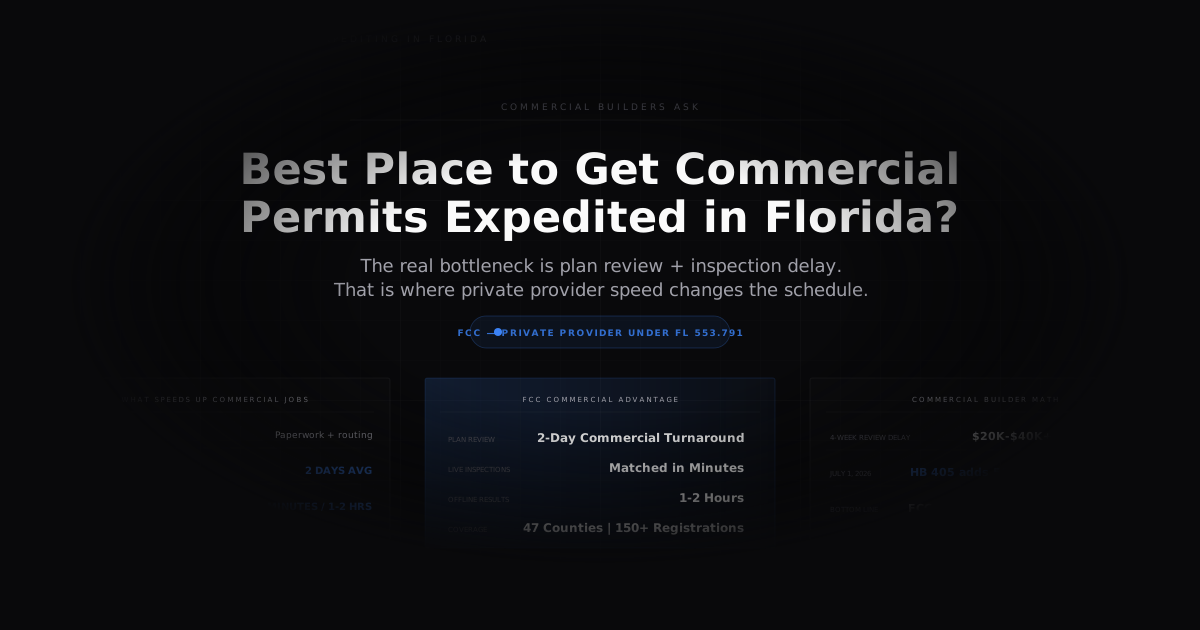
- Offline inspections let office staff submit GPS-tagged photos and video on behalf of field crews, with results in 1-2 hours
How do live virtual inspections eliminate permit delays for Florida contractors?
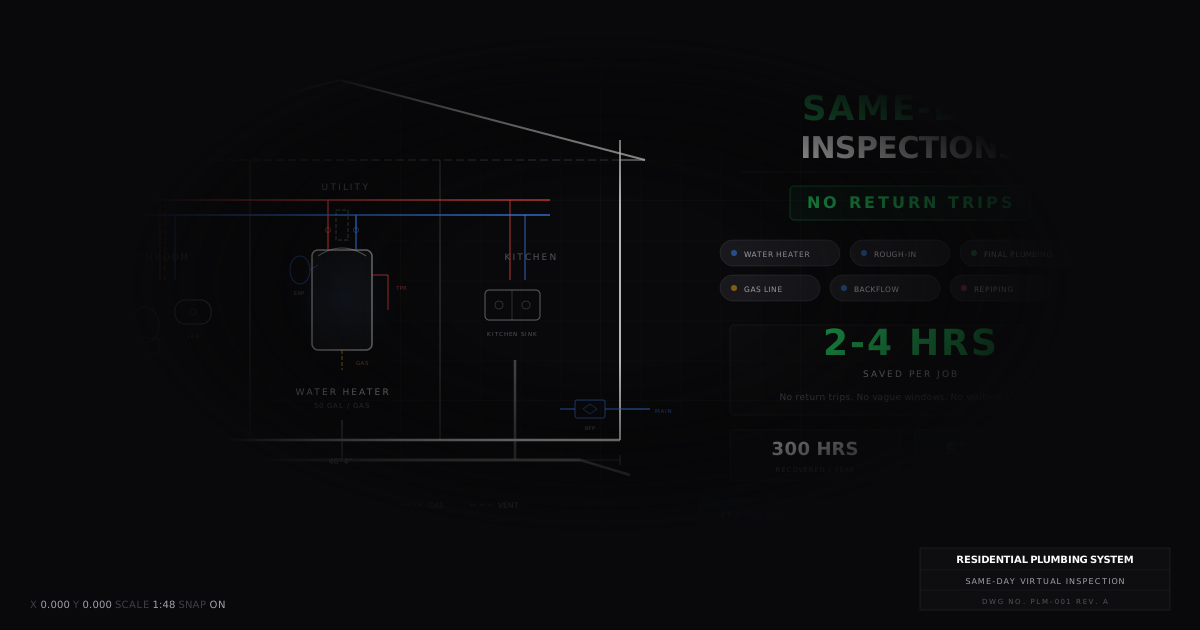
Live virtual inspections eliminate permit delays by replacing scheduled in-person inspector visits with on-demand video-based inspections conducted from your phone. In Florida, private providers like Freedom Code Compliance match contractors with licensed inspectors in minutes through a mobile app. Live inspections return results before the call ends. Offline submissions return results in 1-2 hours. No scheduling weeks out, no vague arrival windows, no return trips.
A permit delay is any gap between when construction work is ready for inspection and when that inspection actually happens. In Florida, those gaps routinely stretch from days to weeks -- and every one of them costs you money.
According to the National Association of Home Builders, permitting and inspection delays add an estimated $26,000 and up to six months to the average single-family home build. That is not a planning problem. That is a system problem. Building departments are understaffed, overbooked, and running on processes that were not designed for how modern construction moves.
Live virtual inspections eliminate the biggest bottleneck in that system: the physical inspector visit. Instead of scheduling days or weeks out, waiting for a vague arrival window, and keeping someone on-site to meet an inspector who may or may not show up on time -- you get inspected from your phone, in minutes, and move on.
This guide covers exactly how live virtual inspections work, which inspection types qualify, how to prepare your crew and your job site, and how to measure results. If you are a Florida contractor losing time and money to building department delays, this is the playbook.
Understanding Permit Delays and Their Impact on Construction
A permit delay is any period during which construction progress is stalled because an inspection has not been completed or a plan review has not been returned. It is the time between "the work is done" and "someone official says it is done." In Florida, that gap is often measured in weeks, not hours.
The numbers are painful:
- Idle crew time: Your crew cannot move to the next phase until the current phase passes inspection. They are on the clock, standing around or getting shuffled to another job site that is not ready for them.
- Lost revenue: Most contracts tie payment milestones to passed inspections. You did the work, you spent the materials, but you cannot bill until an inspector signs off. Every delay is cash flow you cannot access.
- Extended carrying costs: Interest on construction financing, insurance premiums, equipment rental, and overhead do not pause while your permit sits in a queue. Industry estimates put the additional carrying cost at roughly $30,000 per single-family new construction project due to permitting and inspection delays.
- Missed deadlines and contract penalties: Commercial projects often have liquidated damages clauses. Residential clients blame the contractor, not the building department. Either way, the delay lands on you.
- Cascading schedule disruptions: One delayed inspection pushes the next trade, which pushes the next, which pushes the close date. A two-day inspection delay can become a two-week project delay.
The root cause is almost always the same: too few inspectors handling too many requests, with no mechanism for contractors to get inspected on their own schedule. Live virtual inspections change that equation entirely by removing the need for a physical inspector visit and putting the scheduling power back in the contractor's hands.
What Are Live Virtual Inspections and How They Work
A live virtual inspection is a real-time, video-based building inspection conducted remotely by a licensed inspector, where the contractor walks through the completed work on camera and receives a pass or fail result before the call ends. It replaces the in-person site visit with a live video connection -- same code standards, same licensed professionals, no travel required by either party.
Three Modes of Virtual Inspection
Not every inspection works the same way. Virtual inspections generally fall into three categories:
- Live video (synchronous): The contractor and inspector connect via live video call. The contractor walks the inspector through the completed work in real time. The inspector asks questions, requests specific camera angles, and issues a result on the spot. This is the gold standard for virtual inspections -- FCC pioneered this approach in Florida.
- Recorded/offline (asynchronous): The contractor submits photos and videos of the completed work through an app or platform. A licensed inspector reviews the media and returns a pass or fail result, typically within 1-2 hours. Offline inspections are especially useful for companies where office staff submit inspections on behalf of field crews using GPS-tagged, timestamped media.
- Smart scheduling: The inspection platform determines which method applies based on the inspection type and project requirements. Some inspections -- particularly those involving active testing like pressure tests -- require live video. Others qualify for offline submission. The system handles this automatically so you do not have to figure it out.
Step-by-Step: How a Live Virtual Inspection Works
- Request the inspection. Open the inspection app from your phone on the job site. Select the inspection type and submit your request.
- Get matched with an inspector. The platform routes your request to a licensed, appropriately credentialed inspector. With FCC, this happens in minutes -- not hours or days.
- Pre-check. Before the video call begins, confirm you have adequate cell coverage (4G LTE minimum), your camera lens is clean, and the work area is accessible and well-lit.
- Live video walkthrough. The inspector directs you through the inspection via video call. They will ask you to show specific elements -- connections, fasteners, clearances, labels, code-required details. Walk slowly, hold steady, and follow their instructions.
- Inspector feedback. The inspector reviews what they see against the applicable Florida Building Code requirements. If something needs a closer look, they will ask for it in real time.
- Digital upload and documentation. The platform automatically records and stores the inspection media, creating a verifiable digital record tied to the permit, project, and inspector.
- Result notification. You receive your pass or fail result before the call ends. If it is a pass, the result is transmitted to the building department automatically. If corrections are needed, you know exactly what to fix -- no waiting days for a written report.
Integration with Permit Software and Private Provider Inspections
Virtual inspection platforms that serve private providers under Florida Statute 553.791 integrate directly with building department workflows. When FCC completes a virtual inspection, the result is sent to the building department immediately. Some jurisdictions reflect these results in their system in real time; others update when the Certificate of Compliance (COC) is filed. Either way, the contractor does not need to chase paperwork between the private provider and the building department.
Benefits of Live Virtual Inspections for Building Permit Approvals
Same-Day Turnaround
The single biggest advantage of live virtual inspections is speed. With FCC, you request an inspection and get matched with a licensed inspector in minutes. The inspection itself takes 10-20 minutes. You have a result before you leave the job site -- the same day, often within the same hour you finished the work. Compare that to building departments where you are scheduling 3-7 business days out for a 10-minute visit.
35% Fewer Miles Driven
Contractors who switch from in-person building department inspections to virtual inspections report driving approximately 35% fewer miles per month on inspection-related trips. No return trips to finished job sites. No driving across town to meet an inspector. Your truck stays pointed toward the next paying job.
Digital Records Improve Re-Inspection Workflows
When an in-person inspection fails, the inspector leaves a handwritten note or a brief comment in the building department system. You often have to call to clarify what they actually want. With virtual inspections, every inspection is recorded. You have a digital record of exactly what the inspector reviewed, exactly what they flagged, and exactly what you need to fix. Re-inspections are faster because both sides have a clear reference point.
Flexible Scheduling
Building departments give you their schedule. Virtual inspections work on yours. Need an inspection at 7am before the drywall crew arrives? Done. Need to get a final inspection at 4pm on a Friday so you can close a permit before the weekend? Done. FCC conducts inspections on your timeline, not the building department's.
Comparison: Live Virtual Inspections vs. Traditional In-Person Inspections
| Factor | Live Virtual Inspections | Traditional In-Person Inspections |
|---|---|---|
| Speed to result | Minutes (live) or 1-2 hours (offline) | 3-7 business days to schedule, plus on-site wait |
| Cost to contractor | Inspection fee only; no travel, no lost billable hours | Inspection fee + fuel + 2-4 hours lost per trip |
| Transparency | Digital record of entire inspection; clear correction notes | Handwritten notes or brief system comments |
| Flexibility | On-demand; inspections available when you finish the work | Fixed by building department calendar and inspector availability |
| Re-inspection speed | Fix the issue, re-request immediately | Reschedule for another 3-7 day window |
| Geographic constraints | None -- inspector can be anywhere in Florida | Inspector must physically travel to site |
| Documentation | Timestamped, GPS-tagged digital media | Inspector's field notes (often minimal) |
Assessing Eligibility and Policies for Virtual Inspections
Not every inspection on every project can be conducted virtually. Understanding what qualifies -- and what does not -- saves you time and prevents surprises mid-project.
Standard Eligibility Criteria
- Project type: Residential (single-family, multifamily), commercial, and mixed-use projects are all eligible for private provider virtual inspections in Florida, though some complex commercial inspection types may require in-person verification.
- Inspection type: Most structural, mechanical, electrical, plumbing, roofing, and energy code inspections qualify for virtual inspection. Inspections that require active physical testing may require live video rather than offline submission.
- Jurisdiction: The project must be located within a jurisdiction where the private provider is registered. FCC is registered in 50 Florida counties with 191 building department registrations, covering approximately 75% of the state's permitting activity.
E-Signed Consent and NTBO Requirements
Under Florida Statute 553.791, using a private provider requires a Notice to Building Official (NTBO) to be filed with the building department. The NTBO is signed by the property owner or contractor and filed as part of the permit process. This is a standard step -- not additional paperwork. The contractor or property owner handles the NTBO filing; the private provider supplies the necessary documentation.
Mini-Checklist: Is Your Project Eligible?
- Is the project in a Florida jurisdiction where the private provider is registered?
- Is the inspection type covered under the private provider's scope of services?
- Has the NTBO been filed (or will it be filed) with the building department?
- Does the project have an active permit?
If you answered yes to all four, you are likely eligible. If you are unsure about your specific project, contact FCC directly -- real people answer the phone.
Florida Private Provider Compliance
Private providers in Florida operate under Florida Statute 553.791, which authorizes private providers as a legal alternative to local building departments for plan reviews and building inspections. Building departments are required by law to accept private provider work. Property owners have the legal right to choose a private provider, and this right has been upheld in Florida law since 2002.
Choosing the Right Virtual Inspection Platform and Software
A virtual inspection platform is a software system that enables licensed inspectors to conduct building inspections remotely using live video, recorded media, digital checklists, and automated result transmission -- replacing the need for physical site visits.
Features That Matter for Contractors
Not all virtual inspection platforms are built the same. Here is what to look for:
- Live HD video with low latency: The inspector needs to see details -- wire gauges, fastener spacing, label data. Blurry or laggy video leads to failed inspections or requests to re-submit. Look for platforms that support HD video over standard 4G LTE connections.
- Digital checklists tied to inspection types: The platform should guide the inspection based on what is being inspected -- not require the inspector to remember every code requirement from memory. Checklists reduce errors and ensure consistent results.
- Scheduling and inspector matching: The best platforms handle inspector assignment automatically. You request an inspection; the system matches you with a licensed, available inspector. No phone tag. No waiting for a callback.
- Secure, timestamped media storage: All inspection media should be GPS-tagged, timestamped, and stored securely. This protects both the contractor and the inspector and creates a verifiable record of the inspection.
- Building department integrations: Results should be transmitted to the building department automatically. If you have to call the building department to tell them about your private provider inspection, the platform is not doing its job.
- Mobile app support: Inspections happen on job sites, not at desks. The platform must work on a smartphone -- Android and iOS. The myFCC Mobile app is purpose-built for this: request inspections, submit media, track results, and manage projects from the field.
What Sets FCC Apart
FCC is the only company in Florida that offers true instant virtual inspections via mobile app. You open the app, request an inspection, and get matched with a licensed inspector in minutes. No calling an office. No scheduling for later in the week. No waiting for someone to call you back. The myFCC system handles scheduling, inspector assignment, and routing automatically -- and it is available right now in 50 Florida counties.
Defining Workflows and Inspection Types for Virtual Inspections
Written Workflow Protocols
Every virtual inspection should follow a documented workflow. This is not bureaucracy -- it is how you get consistent, fast results. A standard virtual inspection workflow includes:
- Contractor completes work and confirms it is inspection-ready
- Contractor submits inspection request through the platform (live or offline)
- Platform assigns a licensed inspector based on credentials, availability, and inspection type
- Inspection is conducted (live video call or recorded media review)
- Inspector issues pass or fail with documented comments
- Results are transmitted to the building department automatically
- If corrections are needed, contractor fixes issues and re-requests
Inspection Types Suited for Virtual
The following inspection types are commonly conducted virtually through private providers in Florida:
- HVAC change-outs: Equipment swap verification, electrical connections, refrigerant line sets, ductwork modifications
- Roofing: Underlayment, flashing, tile/shingle installation, fastener patterns, drip edge
- Solar installations: Panel mounting, electrical connections, inverter placement, roof penetration sealing
- Electrical panel swaps: New panel installation, grounding, bonding, circuit labeling
- Plumbing rough-ins and finals: Supply, waste, and vent layout; fixture connections; pressure tests (live video)
- Post-disaster inspections: Rapid post-storm or post-damage assessments for insurance and repair permitting
- Window and door replacements: Product approval verification, installation method compliance, impact ratings
- Pool construction phases: Steel/rebar, plumbing, electrical bonding, barrier inspections
Virtual-Only vs. Hybrid vs. In-Person Only
| Category | Examples | Method |
|---|---|---|
| Virtual-only eligible | HVAC change-outs, water heater replacements, re-roof, window/door replacements, solar | Live video or offline submission |
| Hybrid (virtual + jurisdiction-retained) | New construction (structural inspections virtual; zoning, fire, utilities retained by jurisdiction) | Private provider handles code inspections; building department handles retained inspections |
| In-person only | Zoning reviews, fire marshal inspections, public works/right-of-way, utility connections | Building department or fire district only |
Important: Private providers cannot perform all inspections on a project. Zoning, fire, public works, and utility inspections are retained by the local jurisdiction. The contractor must ensure all jurisdiction-retained inspections are completed separately.
Digital Checklists for Error Reduction
Digital checklists built into the inspection platform reduce failed inspections caused by oversight. Instead of relying on memory or a printed code book, the inspector works through a structured checklist specific to the inspection type. This means fewer missed items, fewer correction notices, and fewer re-inspections -- saving time for both the contractor and the inspector.
Preparing the Site and Crew for a Successful Virtual Inspection
A virtual inspection is only as good as what the inspector can see. Preparation takes 5-10 minutes and prevents the most common reasons for delays or failed inspections.
Pre-Inspection Preparation Checklist
- Verify 4G LTE coverage. Before requesting a live inspection, confirm your phone has a strong cellular signal at the job site. If you are in a concrete structure or a low-signal area, move to a spot with better reception or consider an offline submission instead.
- Clean your camera lens. Construction sites are dusty. A dirty lens makes everything blurry. Wipe it down with your shirt -- takes two seconds.
- Ensure adequate lighting. If you are inspecting work in an attic, crawl space, or interior without power, bring a work light. The inspector cannot pass what they cannot see.
- Make the work area accessible. Remove debris, tools, and materials that obstruct the inspector's view of the completed work. If wiring or piping is behind temporary covers, remove them before the call.
- Have your permit and project details accessible. Know your permit number, project address, and which inspection you are requesting. This speeds up the process.
- Designate a site guide. The person holding the phone during the live inspection should be someone who was involved in the work and can answer technical questions. This is usually the lead installer or project manager -- not the newest apprentice.
- Charge your phone. A live video call uses battery. If your phone is below 30%, plug it in or grab a backup.
Digital Permit Card and Posting Requirements
Florida requires that a building permit be posted at the job site before work begins. For virtual inspections, make sure the posted permit is visible and legible. Some inspectors may ask to see it on camera as part of the verification process. If your jurisdiction provides a digital permit card, have it accessible on your phone as a backup.
Training Staff and Inspectors for Remote Inspection Protocols
Virtual inspections are straightforward, but the first one always has a learning curve. A little preparation goes a long way.
Run a Pilot Inspection
Before your first real virtual inspection, do a practice run. Have your lead installer or project manager open a video call with a colleague and walk through a recently completed job as if it were a real inspection. This builds muscle memory for camera angles, pacing, and communication -- so the actual inspection goes smoothly.
Training Topics for Your Crew
- Device setup: How to open the app, request an inspection, and join a live video call. Make sure every crew member who might handle an inspection knows the basics.
- Camera framing: Slow, steady pans. Hold the phone landscape for wider views. Get close enough for details (labels, gauge readings, fastener spacing) but not so close that context is lost. The inspector will direct you, but knowing the basics speeds things up.
- Role of the live guide: The person on camera is not just a cameraman. They are the inspector's eyes and hands. They need to be able to identify components, point out specific elements on request, and answer questions about the installation.
- Evidence capture for offline inspections: When submitting an offline inspection, the photos and video must tell the complete story. Shoot wide establishing shots of the work area, then detail shots of every code-critical element. Follow the submission checklist in the app.
ICC and AHJ Guidelines
The International Code Council (ICC) has published guidelines for virtual inspections that many Florida authorities having jurisdiction (AHJs) reference. These guidelines cover video quality standards, documentation requirements, and acceptable inspection methods. FCC's inspection protocols align with ICC recommendations and meet or exceed the requirements of Florida's building departments. Broward County recently adopted virtual inspection policies following this framework.
Measuring Success and Continuous Improvement
Once you start using virtual inspections, track the results. The numbers will justify the switch -- and help you optimize further.
Key Performance Indicators (KPIs)
- Turnaround time: Measure the time from inspection request to result. With FCC, live inspections are measured in minutes. Offline inspections average 1-2 hours. Compare this to your historical building department wait times.
- Re-inspection rate: Track how often inspections require corrections and re-inspection. Virtual inspections with digital checklists typically produce lower re-inspection rates because the checklist catches items before they become failed inspection points.
- Permit closure time: Measure the total time from permit issuance to Certificate of Compliance. Contractors using virtual inspections consistently close permits weeks faster than those relying on building department schedules.
- Virtual vs. in-person ratio: Track what percentage of your inspections are conducted virtually. The higher this ratio, the more time and money you are saving. Most FCC clients move 80-100% of eligible inspections to virtual within the first month.
- Cost per inspection: Factor in the inspection fee plus all indirect costs (travel time, fuel, lost billable hours). Virtual inspections almost always cost less when you account for the full picture.
Team Debriefs and Feedback
After your first 5-10 virtual inspections, debrief with your crew. What went well? What was confusing? Did any inspections fail for preventable reasons? Use this feedback to adjust your preparation process. Most contractors report that virtual inspections become second nature within a week.
Evolving Your Best Practices
Keep a running document of lessons learned. Which camera angles work best for specific inspection types? Which crew members are best at running inspections? What preparation steps save the most time? This living reference becomes a training tool for new hires and a quality standard for your company.
Best Practices and Common Challenges
Best Practices for Virtual Inspections
- Request the inspection as soon as the work is complete. Do not wait until the next day. The sooner you request, the sooner you get your result and can move on.
- Keep the job site clean and the work area visible. Inspectors cannot pass what they cannot see. Two minutes of cleanup before the call saves ten minutes during it.
- Use landscape orientation for live video. It gives the inspector a wider field of view and makes it easier to see context around specific details.
- Follow the inspector's directions, not your instincts. They know what they need to see. Let them lead the walkthrough.
- Submit more media than you think is necessary for offline inspections. Extra angles and detail shots are always better than not enough. Incomplete submissions get sent back for additional media, which adds time.
- Confirm your inspection type before requesting. Make sure you are requesting the correct inspection for the current phase. A rough-in request when you are ready for a final wastes everyone's time.
- Keep your app updated. Inspection platforms push updates that improve video quality, add features, and fix bugs. An outdated app can cause connection issues.
- Establish a backup plan for poor connectivity. If live video is not working, switch to an offline submission. Do not waste time troubleshooting cell signal when you could submit photos and get a result in 1-2 hours.
Common Challenges
- Poor cell signal on the job site. This is the most common issue. New construction sites, concrete structures, and rural areas can have weak coverage. Always verify signal strength before requesting a live inspection. If signal is consistently poor at a site, default to offline submissions.
- Inadequate lighting. Attics, crawl spaces, and interiors without power are dark. The camera on your phone needs light. A $20 rechargeable work light solves this permanently.
- Shaky camera work. Walking and filming at the same time produces unwatchable video. Stop moving when you need to show a detail. Hold the phone with both hands. Steady beats fast.
- Incomplete offline submissions. Submitting three photos when the inspector needs twelve leads to a request for more media, which delays the result. Follow the app's submission checklist completely.
- Crew resistance to change. Some experienced contractors are skeptical of virtual inspections until they try them. Run a pilot inspection on a simple job (water heater replacement, HVAC change-out) to build confidence. Once they see a 10-minute inspection replace a half-day trip, resistance evaporates.
- Automated expiration reminders. Permits have expiration dates. Virtual inspection platforms like FCC track your project timeline and send reminders so you do not accidentally let a permit lapse while waiting to schedule inspections.
- Rural connectivity limitations: In parts of rural Florida where 4G LTE coverage is inconsistent, live video inspections may not be reliable. Offline inspections -- where you submit photos and video that were captured with GPS tags and timestamps -- are the better option in these areas. You do not need a constant connection to submit; you just need enough signal to upload the files, which can be done from a location with better coverage.
Stop Waiting. Start Building.
Every day you spend waiting on a building department inspection is a day your crews are not productive, your cash flow is stuck, and your project timeline is sliding. That is the old way. It does not have to be your way.
Live virtual inspections through a Florida private provider give you inspections in minutes instead of days. From your phone. On your schedule. With results before you leave the job site.
FCC is registered in 50 Florida counties with 191 building department registrations. Whether you are a home builder trying to shave weeks off your build timeline or a single-trade contractor who wants to stop making return trips for 10-minute inspections, we built this for you.
Set up your FCC account and get your next inspection done in minutes. Or call us -- real people answer the phone.
Frequently Asked Questions
How do live virtual inspections reduce project downtime?
Live virtual inspections reduce project downtime by eliminating the wait between completing work and getting inspected. Instead of scheduling an in-person inspection 3-7 business days out and keeping someone on-site during a vague arrival window, contractors request a virtual inspection from their phone and get matched with a licensed inspector in minutes. Results are delivered before the video call ends -- meaning the next trade can start the same day, invoices can be sent immediately, and crews stay productive instead of waiting around for a building department inspector who may not arrive on time.
What equipment is needed to conduct a live virtual inspection?
A live virtual inspection requires a smartphone (iPhone or Android) with a working camera and microphone, a stable 4G LTE or Wi-Fi connection, and adequate lighting at the work area. No specialized equipment is needed. For best results, clean your camera lens before the call, use landscape orientation for wider views, bring a rechargeable work light for dark spaces like attics and crawl spaces, and ensure your phone has at least 30% battery. The inspection platform app handles everything else -- scheduling, inspector matching, video connection, and result documentation.
Which types of inspections are suitable for virtual inspection methods?
Most building inspection types are suitable for virtual methods, including HVAC change-outs, roofing, solar installations, electrical panel replacements, plumbing rough-ins and finals, window and door replacements, and pool construction phases. Inspections involving active testing (pressure tests, leak tests) typically require live video rather than offline photo submission. Some inspections are retained by the local jurisdiction and cannot be conducted by a private provider -- these include zoning reviews, fire marshal inspections, public works inspections, and utility connections.
How can contractors prepare for a smooth virtual inspection?
Prepare for a virtual inspection by verifying 4G LTE cell coverage at the job site, cleaning your camera lens, ensuring adequate lighting in the work area, removing debris and obstructions from around the completed work, having your permit number and project details accessible, and designating a knowledgeable site guide to hold the phone during the inspection. The site guide should be someone involved in the work who can answer technical questions and follow the inspector's directions during the video walkthrough.
What are the limitations of live virtual inspections in rural areas?
The primary limitation in rural areas is inconsistent cellular coverage. Live video inspections require a stable 4G LTE connection, and some rural Florida job sites -- particularly new construction in undeveloped areas -- may not have adequate signal strength. In these situations, offline inspections are the better option. Contractors capture photos and video on-site (GPS-tagged and timestamped automatically by the app), then upload the submission from a location with better connectivity. Results are returned within 1-2 hours.